Worship Gathering, Praises, and Prayer Requests

1)  Our Worship Celebration Gathering is this Saturday night at 6:30 in the St. Johns Room of Faith Community Church (3450 CR210, 32259.)  We’ll be focusing on God’s Word in in our heart can help us with Up-In-Out living!  If you can join us – awesome!  If not, please keep us in prayer!

2) Thanks to all who prayed for my healing after my recent surprise attack appendicitis.  Everything went quickly and all the procedures went well.  I am now appendix free, recovering well, and back at work!

3) Our friend and brother Stan Hubbard went to be with the Lord on September 28.  Stan was a faithful prayer supporter of FCMC, interceding regularly for our church, our missions, and for me personally.  He and Carleene frequently attending our worship gatherings and special services.  His memorial service is Saturday morning at 11:00 at Mandarin United Methodist Church.  Many family members are traveling in for the service.  Please keep them and Carleene in your prayers.

4) Some of us are returning to Timberwood!  One of our first mission partners – Kidz Rule – is having a fall festival at Timberwood Apartment Complex (in the Atlantic Beach area) on October 24 from 11:00 – 1:00.  This is an opportunity for us to encourage Maria and others who reach out to the Timberwood kids with love, encouragement, and tutoring.

God is good!

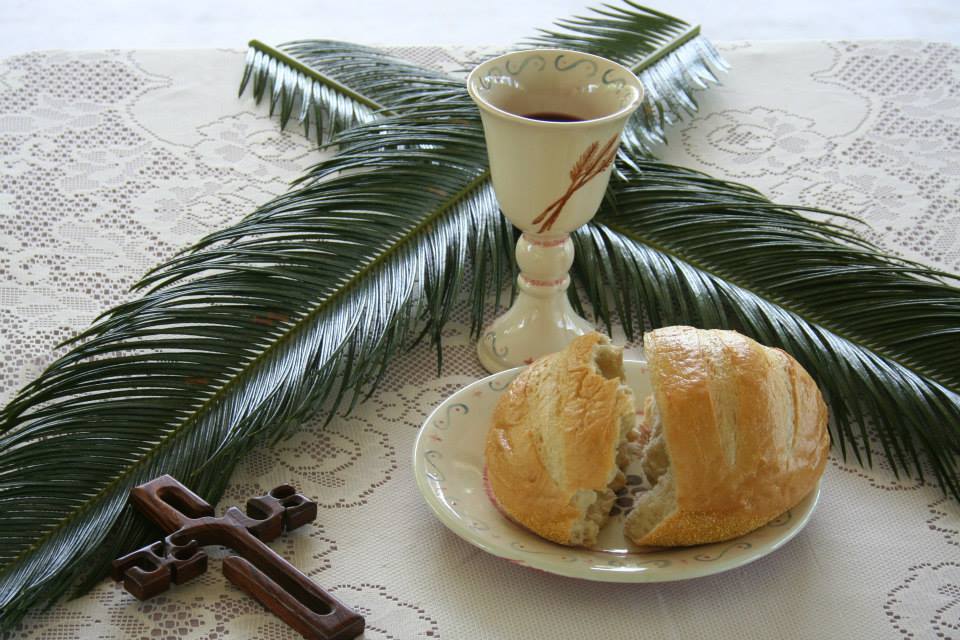
Jessefcmc palm sunday communion

Posted in Discipleship, mission, worship | Tagged , , , , , , | Leave a comment

What Turns Bible Study into Discipleship.

I love Bible study.  I love Bible Study in solitude, one-on-one, small groups, and lecture groups.  I love it for myself.  I love it for others.  As a pastor, I did whatever I could to get people in my churches to dig into the Bible and led by example.  I love teaching people the Bible and teaching them to study it.  My favorite classes in seminary were biblical exegesis classes.   My preaching is deeply rooted in Bible study.

But is it discipleship?  Does it make disciples?

Discipleship – to use Dallas Willard’s definition – is learning from Jesus how to live like Jesus.    The Apostle Paul captured it when he directed the Corinthians to imitate Christ.  A goal of discipleship, as mind blowing as it may seem, is to become more Christ-like.  Wow!

How on earth do we do this?  Really, how on earth.  Maybe in heaven, but on earth?

Well, Jesus actually seemed to think that the best place for discipleship was here.  He took ordinary people and made them his disciples.  Then he gave them the responsibility to do the same for others when he told them to “Make disciples” (Matthew 28:16-20).  Essentially, he told them to “find others (like I found you) and do for them what I’ve done for you.”  And he promised to be with them wherever they went and he gave them the Holy Spirit to help.

So, when we study the Bible and get others to do the same, is it discipleship? Are we making disciples when we study the Bible?  Are we helping people to learn from Jesus how to live like Jesus by studying scripture?

Maybe.  Maybe not.  Let me share with you why I say that.

In my own life, I have noticed seasons of Bible study that were, shall we say, unfruitful.  I read the Bible most every morning.  Sometimes that time of reading has no noticeable effect.  My Bible study did not make me more loving, gentle, kind, faithful, joyful, peaceful, etc.  And as a pastor, I also noticed this in others.   It’s not hard to understand if you think about it.  Study pretty much always leads to knowledge, but it can end there.  The Bible itself speaks to this: “knowledge puffs up, but love builds up.” (I Corinthians 8:1)

So what’s the difference?  How do we turn the knowledge into love.  I’ve come to learn that it’s pretty simple.

Mere Bible study is learning to hear what God says.  Discipleship is learning to hear what God says and putting something into practice in response.

James pointed this out.  “Do not be hearers of the word only and so deceive yourselves, but be doers also.” (James 1:22).  Moreover, Jesus pointed this out at the end of the Sermon on the Mount when he said whoever hears these words of mind and puts them into practice is like a wise man who built his house on the rock. (Matt 7:24).  But the one who hears what is said and doesn’t put it into practice is like a foolish man who built his house on the sand.  In the introduction to the same teaching in Luke’s gospel, Jesus says “Why do you call me ‘Lord, Lord.’ and do not do what I say?” (Luke 6:46)  Why indeed?

The key to becoming wise, to living in a way that honors Jesus, to not deceiving ourselves about our faith is, the key to discipleship, I believe,  studying the Bible in a way that leads to action.

We have a discipleship tool for this called the Learning Circle.  It’s a great tool, but is kind of subtle, applies to more than just Bible study, and takes a while to learn.  But a simpler step is this, something you could take away from this blob post is this:

Turn your Bible Study into discipleship by asking three questions:

  1. What did God say to me in His Word today?
  2. What does it mean about me, about God, or about our relationship?
  3. What am I going to do about it?

When you do something about it –   when you hear the word and put it into practice – that leads to discipleship, which leads to spiritual growth and maturity in Christ.  That is the kind of Bible study that helps us to become more like Jesus.

If I could add one thing to my 33 years of Bible study it would be this: Bible study must lead to prayerful action where God has put me.  He speaks to us through His word for a reason.  What has He said?  What does it mean?  What will we do about it?

Quick illustration.  Last night at discipleship huddle, several members of the group shared how they are becoming more engaged in praying with others where they work whenever a need arises.  Let me be clear: they aren’t finding other Christians and scheduling secret prayer meetings.  When they feel prompted to pray for someone in the course of their jobs who needs prayer, they are pausing to listen, love the person, and pray for them.  Listen-Love-Pray is a pattern of prayer we focused our Bible Study on over the summer.  What they learned, they are putting into practice.  And my heart leaps when I hear such things – for it is through such simple responses to God’s Word that the Kingdom of God is advancing here on the First Coast!

And that is good news!

Blessings on the journey!

Posted in Uncategorized | Tagged , , , , | Leave a comment

Worshiping From Discipleship and Mission

In yesterday’s post, we looked at two aspects of the kind of worship that flows from a life of discipleship, mission, and authentic community.   Looking at I Corinthians 11-14, I offered up two observations: 1) Mainly, these passages deal with problems the Christian community was having.  and  2) While their worship experiences made allowance for passive observers, most worshipers came expecting to contribute.

Yesterday, I wrote about 1 worship that flows from authentic, non-pretending community.  Today, I want to take on #2.  Worshipers came expecting to contribute.

The first question to address is why.  Why did they come in like that?  And conversely, why is it that so many of followers of Jesus show up at worship just to observe?  What was going on in the approach to faith in the typical first century Jesus-follower that is often missing today.

In the first century, followers of Jesus were intentional about learning to imitate Jesus Christ in their lives while being guided by the hope of the resurrection.  For them, faith was far more about living life while seeking to imitate Christ.  They were learning what it meant to be one of God’s people and they expected to see God’s Kingdom advance.

In our church, we try to recapture that.  There’s something about being engaged in mission with a community that develops a healthy expectancy of seeing God at work.  When we see God at work, we are motivated to worship.  There’s something about approaching discipleship with the mind-blowing recognition that its purpose is learn from Jesus how to live like Jesus.  It allows us to worship from what God, by the power of the Holy Spirit, is doing in us.

There’s are two triangles I use to teach this: the Covenant Triangle and the Kingdom Triangle.  Together, Covenant and Kingdom capture much of what the Bible is about.  Make Breen calls Covenant and Kingdom the DNA of the Bible -and I agree with him.  The Covenant piece emphasizes our relationship with God that gives us a new identity in Christ.  We come to know God as Father through faith in Jesus Christ.   We are a part of God’s family, loved and cherished not for what we can offer, but simply because we are God’s precious child! Worship flows from that realization.  But wait, there’s more!  The realities of God’s Kingdom, which we teach using the Kingdom triangle helps us to understand the authority we have been given.  It’s unbelievable sometimes, but God calls us to represent His Kingdom and to work in partnership with God to advance that Kingdom.   From Covenant, we celebrate what God has done for us!  From Kingdom, we look expectantly to see God moving around us and through us!

When people come to understand these two realities, they have something to bring to a worship service.

In every service, we have a place where we ask “What is God Doing on the First Coast?”  Most of the time, we bring in a guest who will share about a ministry.  It is inspiring! But sometimes I ask: “Where have you seen God at work on the First Coast?”  And people tell stories.  “I prayed with a co-worker.”  “I talked with a friend who’s heart is breaking.”  “I gave a devotional to guy who’s really upset.”  “I’ve begun walking with a  neighbor who’s marriage is on the rocks.”  “I was invited to pray at a family funeral.”

After we share those stories we’re ready to worship.  Because when people share their story of what God is doing, faith and expectancy rises.  And that is a great tone to set for worship

Practically, we divide up the responsibilities for worship.  We do like an organized worship service.   We work on the service a week before hand – writing the common prayers and selectingMy role in the service is pretty much limited to preaching, announcements, and creating a one sheet bulletin.   We share set up, preparation, and leading the liturgy.  I prepare differently for my messages these days – more prayer, less focus on research.  My sermons flow from what we’re doing as a missional community.  Dan and Carrie help us worship in song – we are so blessed to have their help!  I usually send them a theme for the evening a few days ahead of time.  We pray and trust the Spirit to do good things through the music.  And we ask people to volunteer to take up the offering.  We cover the bases.

I have good news for you if you lead a worship-service centered church and want your worship services to flow more from mission and discipleship.  If you disciple people in such a way that they begin living in light of the truth of God’s Covenant promises and in the expectant reality of the Kingdom of Heaven, and if you begin to celebrate what God is doing in their lives, I believe your worship services will grow in joy and expectancy.

The challenge is the paradigm.  In most churches, I think, discipleship and mission flow from worship services.  We make an announcement about a group that is forming, a class that is offered, an opportunity to serve, etc.  and hope people plug in.   We may even coordinate a series of messages designed to get people involved and strategically coordinate ways for them to sign up.  Those techniques do work, you know, but I’m only trying to illustrate the point that if that is the case, discipleship and mission are flowing from worship.   In the New Testament, it seems to me, things usually flowed from discipleship and mission, from Covenant and Kingdom, to worship and glorifying God.

May you find much grace for the journey.

Posted in Uncategorized | Tagged , | Leave a comment

Worship and Real Life

“When you come together, each of you has a hymn, or a word of instruction, a revelation, a tongue or an interpretation.  Everything must be done so that the church may be built up.”  (I Corinthians 14:26)

If there is a directory for worship in the New Testament, you’d find it in I Corinthians chapters 11-14.  There you find a descriptions and proscriptions for Christian worship gatherings.

Two observations: 1) Mainly, it deals with problems the Christian community was having.  Those problems were showing up in the worship gatherings.  And, while I don’t celebrate their problems (or ours), I do celebrate that those problems were evident when they came together because it says something positive about the authenticity of the early church community.  2) While their worship experiences made allowance for passive observers, most worshipers came expecting to contribute.

Pointing to two values: 1) People came as they really were.  2) They were expected to contribute.

So, how do we apply this at FCMC?  We’ll take on #1 today and #2 tomorrow.  How do we encourage people to come as they really are?

At this stage in our church’s life, it’s pretty easy to be real with one another.  We’re small.   Many of us spend time together during the week engaged in discipleship and mission.  So we know each other pretty well and see ourselves as partners in the gospel.  We pray for one another and even confess (some) of our sins and our struggles before one another.

We are like an extended family that loves one another and that comes out in our worship gatherings.  Organizationally, we are two missional communities and a few friends, but functionally, at this point we are like one missional community.  While we don’t know everything about each other we know a good deal about one another’s heart-aches, dreams, fears, and aspirations.   We earnestly desire the best for each other.  That’s healthy, I think.  There’s room for privacy, support for openness, and a covering of love.  And because we know each other, we can encourage one another in the struggle and remind each other that God is good.  Tears, fears, celebrations, laughter, and honest words are okay and normal in our worship gatherings.  It’s easy to pause for prayer.  By the way, it also helps that we meet on Saturday nights and do not have the pressure of a tight, one-hour schedule.

How would this work in larger, worship-service centered churches?  Most larger church gatherings require levels of structure and organization that preclude the kinds of relational expressions we enjoy at FCMC.   This can be addressed through organizing other church ministries such as the development of healthy small groups.  (Don’t leave out missional engagement!)   A more challenging obstacle is western church culture.  The culture of many churches encourages people to dress well, put on a smiling face, and pretend everything is okay.  This creates a culture of pretending which produces shallow relationships and squeezes out the permission to be real in worship gatherings.  One way to tell is by paying attention to the kinds of problems people are open about in worship settings.  For example, if prayer requests are routinely taken in worship and no one seeks prayer for themselves apart from health issues, it is probably a pretending culture.

A story comes to mind.  God had been at work in a particular families life. For years, they had covered up the dad’s problem with alcohol.  Things got bad.  The family almost split, but then everything came out when the dad lost his job.  And then God provided.  God intervened in the dads life.  He accepted Christ.  He entered recovery.  The family also got help.  Their family was saved!   One day, at a worship gathering, the mom was given space to share the story.  It was beautiful and moving.  But a strange thing happened.  After the service, I asked several people what they thought about the story.  Many of the people I spoke with would not even acknowledge what had been said.  It was as if they blocked it out of their minds.

I am grateful when I hear of pastors reminding their congregations that really, everyone is a mess, including the pastor.  It is so healthy when we are reminded we can be real before God and one another.  But be careful if you are a pastor or church leader working to develop a healthier more authentic culture.  Cultures of pretending offer a form of protection to people who hide their secrets.  Movement toward more authenticity makes secret keepers uneasy.

But it’s worth it!  May the Lord bless you on the journey.

Posted in Uncategorized | Tagged , , , , | Leave a comment

It’s Easy To Find Worshipers

You [Samaritans] worship guessing in the dark.  We Jews worship in the clear light of day.  God’s way of salvation is made available through the Jews.  But the time is coming – it has, in fact, come – when what you’re called will not matter and where you get to worship will not matter.”  – Jesus to the Samaritan Woman at the well.  John 4.

Don’t misunderstand the title.  I am not suggesting that it is easy to get someone to attend Christian worship services.  Depending on the church and the person you are hoping to get to the service, it may be nearly impossible.

For many years, I worked very hard and intentionally at trying to get people, especially young people, to attend worship services – and had some level of success.  As I began to lead in churches, I had the privilege of working with teams to develop worship experiences that would appeal to different groups.  Sometimes we did so in the face of pretty serious opposition.  But many of us very much wanted to remove barriers that kept people from coming to worship and were willing to pay the price.  If people liked organ music, robes, and traditional liturgy, we would try to provide. If people liked guitars, drums, and a laid back atmosphere, we’d develop another service for that.  If people worked on Sunday mornings, we’d set something up for Sunday nights.   We did some good work, but it was hard work and often left me wondering if it was really worth it.  It also tested people’s love for one another.  “Loving across our differences” is a wonderful idea but not all church attendees embrace it when it comes to worship variations.

And still, it was hard to get them in the door.

But we worked hard at this because worship was the central practice in the churches I grew up in and the churches I served.   For the sake of this article, let’s call them “worship-centered churches”.   Most churches are.  You can tell if it is worship centered very easily: by paying attention to what is measured.  If the church is counting the number of people who attend worship or measuring things against worship attendance (giving per attendee, involvement per attendee, etc.) then it is almost certainly a worship centered church.

The church I serve now is not worship centered.  We don’t work hard to get people to worship anymore.  We realize we don’t have to.  More importantly, we are starting to understand we are not called to.   You see, people will worship.  The Biblical writers knew this.  The prophets understood it.  Jesus knew it very well.  People will worship because human beings naturally do so.  The word worship comes from an Old English word that roughly translates “worth-ship”. When we worship, we declare and celebrate someone or something’s “worth.”   Furthermore, it involves devotion.   If you look around, you will notice that people actively worship all the time.  If they think something is worthy they will worship it.  If they do not worship the Most High God revealed in Jesus Christ, they’ll likely worship something or someone else.  They may call the something or someone “God” or not.  But they will worship.  Here are a few common “gods”:  Health, Money, Work, Food, Politicians, Rock Stars, Local Heroes, the Military, Celebrities, Nations, Ideologies, Family, Economic Systems, Authors, and Sports Teams.

I used to worship a sports team.  I went to Auburn in the 1980’s.  On Saturdays, many of us wore orange and blue and worshiped the football team.  (Well, they were quite good.)  I had friends who told amazing stories about the coaches or particular players.  It was very worshipful – and the “services” were amazing.   75,000 strong!  We had songs, liturgies, traditions, and literature.  People would dress up for the game.  They would support the cause with cash donations and volunteer hours.   We had creeds.  And we had strong opinions about what a true fan was and was not.  And if the team lost a few (somewhat rare in those days), we proved our faithfulness by cheering harder (unlike those “fair-weather fans”).   Support for the team was a great unifying religion on campus.

Of course there were people who worshiped elsewhere, like the University of Alabama.  We were very suspicious of them…

Not to digress, my point is simply this: people naturally worship.   (And yes, I still cheer for Auburn!)  If people do not worship God, they’ll worship something else.  Even atheists worship.  Some I know are very passionately devoted and evangelistic in their beliefs – although they might be offended if I told them they were worshiping.

The 10 commandments begin with warnings about worshiping false gods.  The prophets of the Old Testaments warned people to stop worship idols and return to worshiping God.  Jesus told the woman at the well that someday people would worship differently – “in spirit and in truth.”  Something would happen that would help people stop worshiping poorly.  They would begin  to worship in the right direction.  Paul writes that a day will come when “every knee will bow and every tongue confess that Jesus Christ is Lord to the glory of God the Father” (Philippians 2).   In other words, someday everyone will stop worshiping the wrong things and worship Jesus.

So logically, we see that the Apostle Paul devoted his life, not to getting people to worship Jesus, but to helping people to imitate Jesus and celebrate what God had done in Christ. Jesus himself didn’t devote too much time to trying to convince people that he should be worshiped.   (Although he didn’t stop them when they did so ).  Rather, Jesus commissioned his disciples to make disciples.  That is what Peter, Phillip, Barnabas, Paul, and the early church worked at:  Making disciples.

Because if you make disciples of Jesus, you get worshipers of Jesus.  Disciples of Jesus will, in Spirit and in Truth, worship God who is revealed in scripture by the power of the Holy Spirit, whom Jesus called Abba Father, and who loves us more than we could possibly know!  Disciples make great worshipers!

This has some pretty healthy implications for worship services, by the way.  If you have responsibility for a worship service – you know how much time goes into preparation.  You also know the emotional ride that follows the service as people “evaluate the music, preaching, fashion, and atmosphere.”  Well, imagine having to spend very little time trying to promote and develop your worship ministry.   Imagine your services being aimed at celebrating what God was doing.  Imagine your people coming together with a song, spiritual song, or prophetic word!  Imagine people sitting up expectantly during the preaching, hoping to hear a word that would help them in their mission or encourage them in their journey to imitate Christ while helping others to do the same!   Imagine the time after the service when people say, “how can we put what we heard into practice?”

When I led worship services in churches that were “worship centered”, some of what is mentioned above happened.  But it was rare.  The services were very organized and somewhat performance oriented – so spontaneity often produced awkward moments.  But the services I lead today, it seems to happen more commonly.

Don’t get me wrong – I love the worship services of worship-centered churches.  I love – really love – good preaching, good music, and good order.  It lifts my soul.  But such heavily planned and organized worship services make it challenging to make room for I Corinthians 12-14 style worship gatherings – and our people need those.

So the church I serve now is not worship centered.  We emphasize discipleship first – as Dallas Willard put it, we are “learning from Jesus to live like Jesus.”   Secondly, we emphasize missional engagement – that is, we look to see where God is at work in the world around us and we try to join in.  Then we come together to worship to celebrate what God is doing around us and through us.  We’re learning: learning to allow our worship to flow from who we are in Christ; learning to worship in response to what we see God doing; learning (and this is tough for a Presbyterian like me) to allow our services be subject to the leading and guidance of the Holy Spirit!  We are learning to make room for holy interruptions.  We are learning to expect them!   It’s a pretty cool season.  But it’s not natural for us yet.  Most of us have been in worship service centered churches all our lives. Old paradigms stick, you know.

Candidly, I think many worship-centered churches could find ways to make healthy shifts to make discipleship and missional activity more central.   But I should warn you, if you are a church leader and are feeling drawn doing this in your church, be careful.   If there’s one thing I learned from all that work on worship experiences, it’s this: People feel very strongly about the way they worship.   They are passionate about it, devoted to it, committed to it, and want others to join them in it.  You could even say some people worship their way of worship.   To mess with that is to venture into the territory of prophets and apostles.  It’s good work!  But it can be very painful.

Whatever the case, my prayer for you is this: may the Lord guide you on the journey, and may we all look forward to the day when every knee bows and every tongue confesses Jesus Christ is Lord to the glory of God the Father!

May the Lord bless you and keep you!

Posted in Uncategorized | Tagged , , , , , , | 1 Comment